

Top 5 Common Mistakes to Avoid When Shopping for Hair Extensions

Hair extensions offer a quick way to transform your look, adding length, volume, and style versatility. Yet many people make avoidable mistakes when buying them, leading to disappointing results or damage to their natural hair. Understanding these common pitfalls can save you time, money, and frustration. This guide highlights the top five mistakes people make when shopping for hair extensions and how to avoid them for the best outcome.
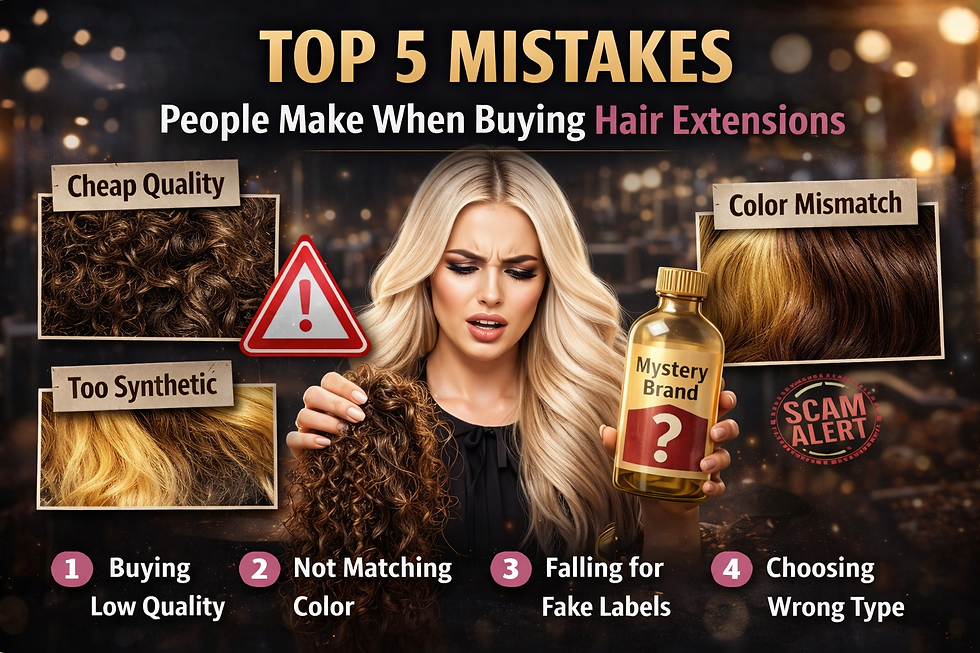
Mistake 1: Choosing the Wrong Type of Hair Extensions
One of the biggest errors is selecting hair extensions without considering the type that suits your hair and lifestyle. Hair extensions come in various forms, including clip-ins, tape-ins, sew-ins, and fusion bonds. Each has pros and cons depending on your hair texture, daily routine, and how long you want to wear them.
Clip-ins are temporary and easy to apply but may not blend well with very fine or very thick hair.
Tape-ins offer a semi-permanent solution but require professional application and maintenance.
Sew-ins work best for thicker hair and need a skilled stylist.
Fusion bonds last longer but can damage hair if not applied or removed properly.
Before buying, assess your hair type and consult a stylist if possible. For example, fine hair may struggle with heavy sew-ins, while thick hair might not hold clip-ins securely. Choosing the wrong type can cause discomfort, poor blending, or damage.
Mistake 2: Ignoring Hair Quality and Origin
Hair quality varies widely, affecting how natural extensions look and how long they last. Many buyers focus on price but overlook the importance of hair origin and processing.
Remy hair is considered the highest quality because the cuticles are kept intact and aligned, reducing tangling.
Non-Remy hair often has cuticles stripped or reversed, leading to matting and shorter lifespan.
Hair sourced from different regions (e.g., Indian, Brazilian, European) has distinct textures and durability.
Avoid extensions labeled simply as “synthetic” or “mixed quality” if you want a natural look and longer wear. For example, Remy Indian hair is popular for its softness and ability to hold curls well. Always ask about the hair’s origin and whether it has been chemically treated.
Mistake 3: Picking the Wrong Color Match
A mismatch between your natural hair color and the extensions is a common and very noticeable mistake. Extensions that are too light, too dark, or have different undertones can look fake and draw unwanted attention.
Avoid buying extensions solely based on the package photo.
Bring a strand of your hair to the store or send a photo to online sellers.
Consider subtle highlights or lowlights in your natural hair when choosing extensions.
Some brands offer custom coloring services for a perfect match.
For example, if your hair has warm golden tones, cool ash-colored extensions will stand out. Getting the color right ensures the extensions blend seamlessly and look natural.
Mistake 4: Overlooking Proper Maintenance Requirements
Hair extensions require care to maintain their appearance and prevent damage to your natural hair. Many buyers underestimate the time and effort needed for upkeep.
Extensions need gentle washing with sulfate-free shampoos.
Avoid excessive heat styling or use heat protectants.
Regular brushing with a soft-bristle brush prevents tangling.
Schedule professional maintenance appointments if using semi-permanent extensions.
Failing to follow care instructions can cause extensions to tangle, shed, or lose shine quickly. For example, sleeping with wet extensions or using regular shampoo can shorten their lifespan drastically.
Mistake 5: Buying Extensions Without Professional Advice
Many people purchase hair extensions online or from stores without consulting a professional stylist. This can lead to buying unsuitable extensions or improper application.
A stylist can assess your hair health, texture, and scalp condition.
They can recommend the best extension type and brand for your needs.
Professionals ensure safe application and removal, reducing damage risk.
They can also help with color matching and styling tips.
For instance, a stylist might advise against fusion bonds if your hair is fragile or recommend a specific brand known for quality. Skipping this step often results in poor fit, discomfort, or damage.


Comments